
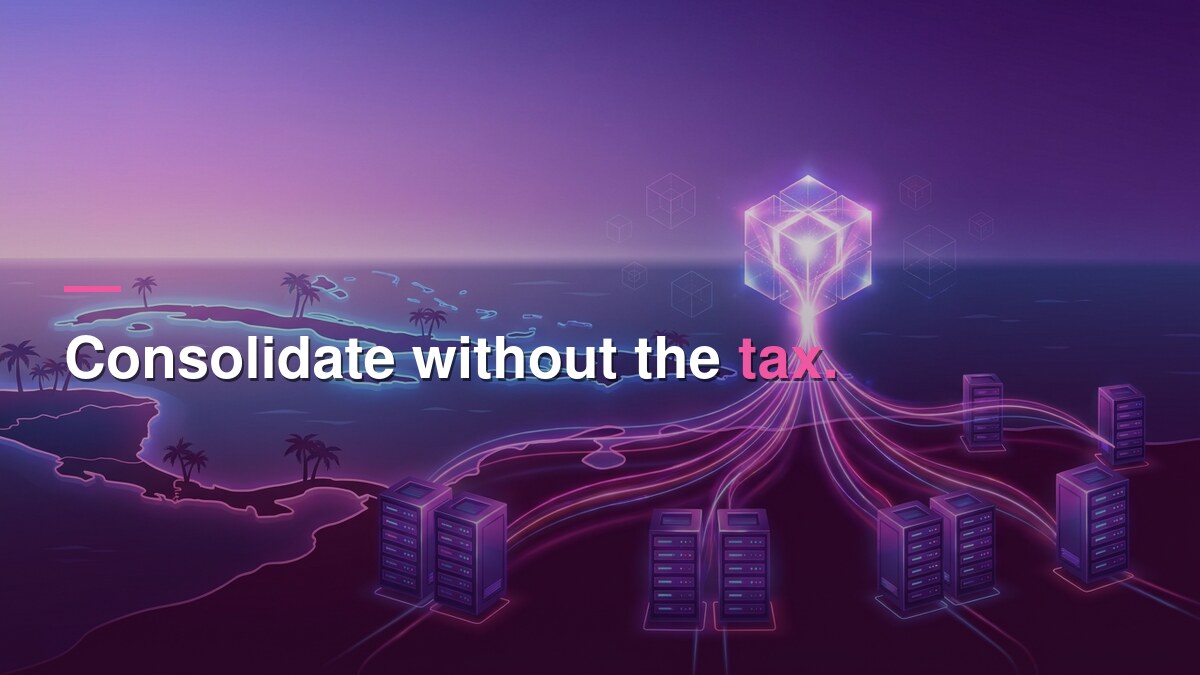
Consolidating a rack of ageing standalone servers onto a single virtualisation platform is supposed to save money. Less hardware, less power, less to maintain. For many operators, proprietary hypervisor licensing quietly reverses that maths, so the project that was meant to cut cost ends up adding to it.
The per-socket tax
Most commercial hypervisors bill per CPU socket. The more you consolidate, the denser your hosts become, and the more sockets you are paying to license. Consolidation that should reduce your running cost instead raises your licence bill, year after year, whether or not you use the features you are paying for.
The single-host risk nobody planned for
Workloads spread across standalone servers each carry their own failure mode, and none has a spare. When one host fails, its workloads stop, because there was never a cluster underneath to catch them. Virtualisation without high availability simply moves the risk onto one bigger box.
The cloud default that does not fit
Some workloads belong in a public cloud. Many do not: latency-sensitive services, data that has to stay on the island, and anything where the monthly bill grows faster than the value. For those, the right answer is not a hyperscaler, it is a properly built platform on your own premises.
What good looks like
High availability from the start. A cluster, not a single host, so a hardware failure restarts its workloads on another node rather than taking them down. High availability that is designed in, not added after the first outage.
An open platform with no per-socket licence. Built on Proxmox VE, using standard, open formats. CALATECH is a Proxmox Authorized Reseller Partner, so licensing and support are handled locally and in your currency, and consolidation actually reduces cost rather than adding to it.
On hardware you own. Deployed on your premises, on assets you already have where they are suitable, with no forced move to a public cloud and no data leaving where it needs to stay.
The point of virtualisation was always to use what you have properly and to make a single failure a non-event. A per-socket licence and a single un-clustered host defeat both. It is worth checking which of those you are actually running before the next renewal, or the next outage, decides it for you.